Agriculture & Food Production
Agricultural Software System Reliability: Why Food Safety Fails When Traceability Breaks
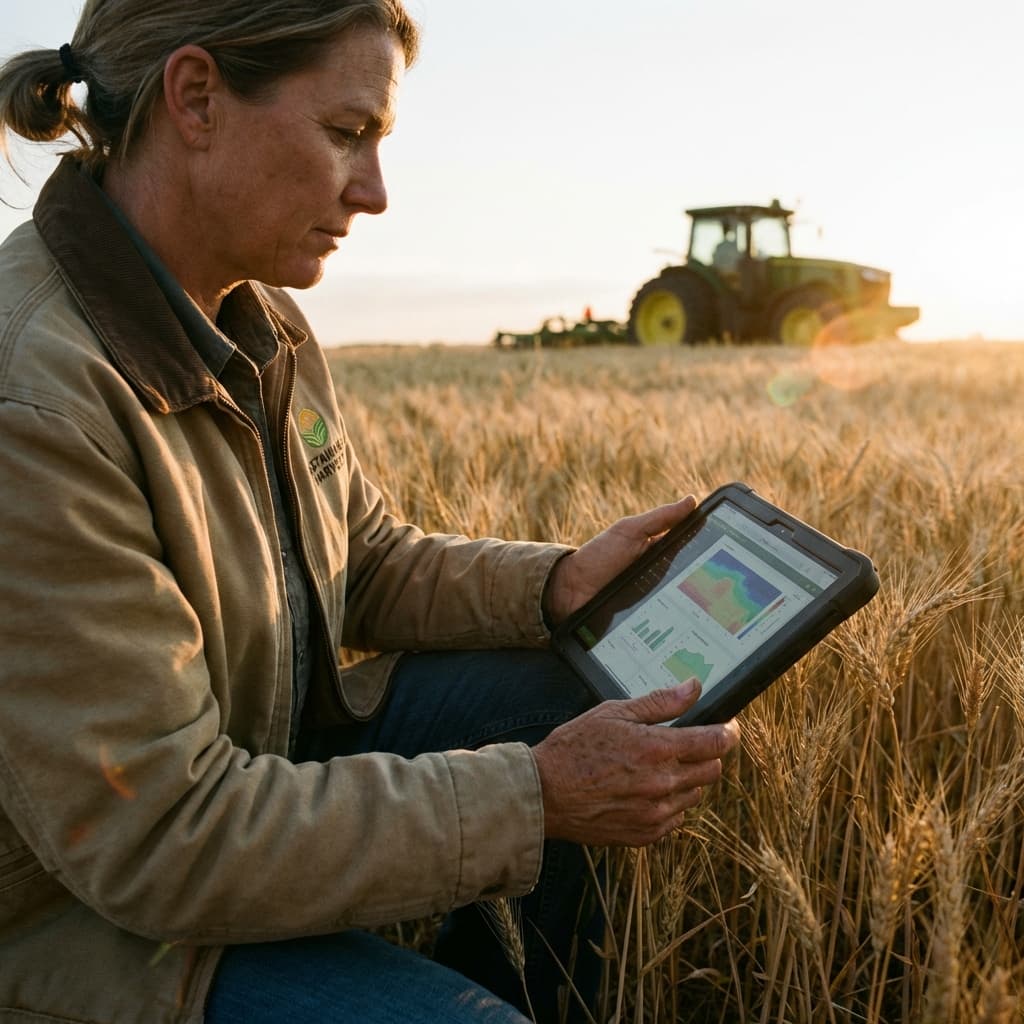
Agricultural and food production operates at the intersection of biology, logistics, and regulation. Weather affects yields, pest pressure affects quality, market timing affects profitability, and regulatory compliance affects market access. Each variable is uncertain, and their interactions are complex. The systems that manage modern agriculture must accommodate this complexity while maintaining the precision that food safety requires.
When agricultural software fails, the consequences extend from farm gate to consumer table. Traceability gaps mean contamination sources cannot be identified during recalls—outbreaks that could be contained affect millions. Compliance documentation gaps mean products cannot access markets. Yield optimization failures mean thin farmers' margins become losses. The software that powers modern food production carries obligations that reach every consumer who trusts the food supply.
The Hidden Failure Mode: Field Variability vs. System Rigidity
Agricultural software fails because farming is variable and software is deterministic. An agronomist specifies that "the system shall track crop inputs by field." A developer implements a data entry system that records inputs with field identifiers. Both believe the requirement has been satisfied.
Then field reality reveals the gaps. The field has variable soil types that require different input rates across zones. The application equipment overlaps at headlands, creating double-application areas. The actual application date differs from the planned date due to weather. The input rate differs from specification due to equipment calibration. The system recorded an input application. It did not record the variability that affects both yield outcome and regulatory compliance.
This pattern pervades agricultural software. Traceability systems track batch numbers but not the lot-level mixing that occurs during processing. Compliance systems track pesticide applications but not the pre-harvest intervals that determine market eligibility. Yield monitoring systems capture harvest data but not the calibration factors that make that data meaningful.
The hidden failure mode is not software bugs. The code executes exactly as designed. The failure is that the design was based on simplified agricultural models that do not accommodate the variability that defines actual farming and processing operations.
Why Traditional Tools Do Not Solve This
Agricultural companies have invested in farm management software, traceability platforms, and precision agriculture tools. These investments create operational capability without solving the variability problem.
**Farm management software** tracks field activities and financial performance, but tracking does not ensure accuracy. A system can reliably store activity records while those records fail to capture the variability that regulatory compliance and precision management require.
**Traceability platforms** link products to source farms, but linkage does not ensure completeness. A platform can maintain product genealogy while mixing, blending, and rework create genealogies more complex than the platform models.
**Precision agriculture tools** collect field-scale data, but collection does not ensure utilization. A system can gather variable-rate maps, yield monitor data, and soil samples while the integration required to use that data for decision support never occurs.
**Compliance documentation systems** generate records for auditors, but generation does not ensure compliance. A system can produce documentation that appears complete while underlying data gaps create compliance exposure.
These tools optimize individual functions within agricultural operations. They do not verify consistency across functions—between what happened in the field and what records reflect, between what regulations require and what documentation demonstrates.
CodeSleuth: A System, Not a Tool
CodeSleuth enforces the discipline that agricultural software requires: every field record verified for variability capture, every traceability chain validated for completeness, every compliance requirement tested for documentation accuracy.
**Discovery** is agronomically aware and regulation-conscious. The Product Discovery Agent treats agricultural variability as a first-class requirement. For input tracking, discovery does not stop at "track crop inputs by field." It continues: What spatial resolution is required—field level, zone level, point level? How should variable-rate applications be recorded? How should application timing variability be captured? What equipment data is available for actual versus planned reconciliation? How should overlap areas be handled? What regulatory requirements affect input record requirements? Every answer produces a specification that accounts for field-level reality.
**Planning** translates agricultural requirements into verifiable technical designs. The Technical Planning Agent produces artifacts that map each operational requirement to specific data models, specific integration points, and specific test scenarios. When a compliance manager asks "how does the system demonstrate pre-harvest interval compliance," the answer is a traceable reference to specific date calculations and specific validation tests.
**Building** enforces agriculture-specific quality gates. The Builder Agent is configured with domain-specific validators: all location data must be captured with appropriate precision, all temporal data must account for timezone and seasonal factors, all unit conversions must use standard agronomic factors. Every code change passes through gates that verify agricultural correctness, not just technical correctness.
**Verification** validates system behavior against realistic agricultural scenarios. The Verifier Agent generates test artifacts that demonstrate system performance across operational patterns. For traceability, evidence includes: simple single-source products, complex multi-lot blends, rework and reprocessing scenarios, cross-season inventory carryover. This evidence supports both operational confidence and audit readiness.
**Security** addresses food supply chain protection. The Security Agent evaluates code against food defense requirements: production data must be protected from tampering, supply chain visibility must be access-controlled, and systems must maintain integrity against intentional adulteration scenarios.
**Criticism** surfaces the compliance risks that production pressures typically defer. The Product Critic Agent identifies gaps between regulatory requirements and implemented capabilities, producing a mandatory record of compliance risks before systems go live.
Industry-Specific Value: Agriculture & Food Production
For agricultural organizations, CodeSleuth addresses the specific risks that define the sector:
**Food safety traceability**: FSMA and global food safety requirements mandate traceability capability. CodeSleuth's verification ensures that traceability systems capture the lot-level genealogy that effective recall response requires.
**Regulatory compliance documentation**: GAP, organic, GlobalGAP, and customer-specific requirements demand documentation. CodeSleuth's discovery process ensures that compliance requirements are captured in system specifications before audit failures occur.
**Precision agriculture integration**: Precision agriculture generates data across many platforms. CodeSleuth's integration verification ensures that data flows accurately between equipment, cloud platforms, and decision support systems.
**Harvest and post-harvest quality**: Quality variations affect market access and price. CodeSleuth's verification ensures that quality tracking, grading systems, and market allocation logic handle the variability that agricultural products exhibit.
**Supply chain coordination**: Agriculture requires coordination between growers, processors, distributors, and retailers. CodeSleuth's verification ensures that data exchange between parties maintains accuracy across integration boundaries.
The Consequences of Inaction
The consequences of agricultural software failures are measured in food safety incidents, market access loss, and producer harm.
**Food safety consequences** are severe. When traceability fails during a contamination event, recalls cannot be targeted—entire categories of product are pulled rather than specific lots. The economic damage extends to uninvolved producers. The public health risk extends to consumers who cannot identify what to avoid.
**Market consequences** are immediate. When compliance documentation cannot be produced, market access is lost. A producer whose records cannot demonstrate GAP compliance loses access to retailers that require it. A processor whose traceability cannot be verified loses access to export markets.
**Producer consequences** compound. When farm management software does not accurately track costs, margins cannot be calculated. When input records are incomplete, warranty claims cannot be substantiated. When yield data is inaccurate, crop insurance settlements are disputed.
**Environmental consequences** persist. When precision agriculture systems fail to capture variable conditions, inputs are applied uniformly where variability exists. Over-application has environmental consequences; under-application has yield consequences. Neither is acceptable.
**Trust consequences** accumulate. Food supply chains run on trust. Processors who receive inaccurate information from suppliers adjust relationships. Retailers who experience traceability gaps switch suppliers. The accumulated effect of unreliable data erodes supply chain partnerships.
Organizations that deploy agricultural software without systematic verification against field variability and regulatory requirements are accepting food safety and market access risk that affects the entire supply chain downstream.
Who This Is For
CodeSleuth is designed for agricultural organizations that recognize the gap between their operational complexity and their software capabilities.
It is for:
- Farms and ranches deploying precision agriculture and farm management systems
- Food processors implementing traceability and quality management platforms
- Agricultural input companies building recommendation and application tracking systems
- Agtech companies developing platforms for the agricultural industry
- Agricultural organizations that have experienced audit failures or traceability gaps
It is not for organizations building consumer food information apps with no supply chain integration. It is not for early-stage agtech startups where compliance requirements are not yet material. It is not for projects where agricultural domain expertise is not required.
CodeSleuth is the system that ensures agricultural software handles the variability of field production and the precision of food safety requirements. For organizations ready to close the gap between agricultural reality and software capability, it is the foundation for systems that producers trust and regulators accept.
Ready to Transform Agriculture & Food Production Software?
Discover how CodeSleuth's multi-agent architecture can enforce the discipline your agriculture & food production organization demands.
Explore Other Industries
See how CodeSleuth works across different sectors