The Implementation Journey
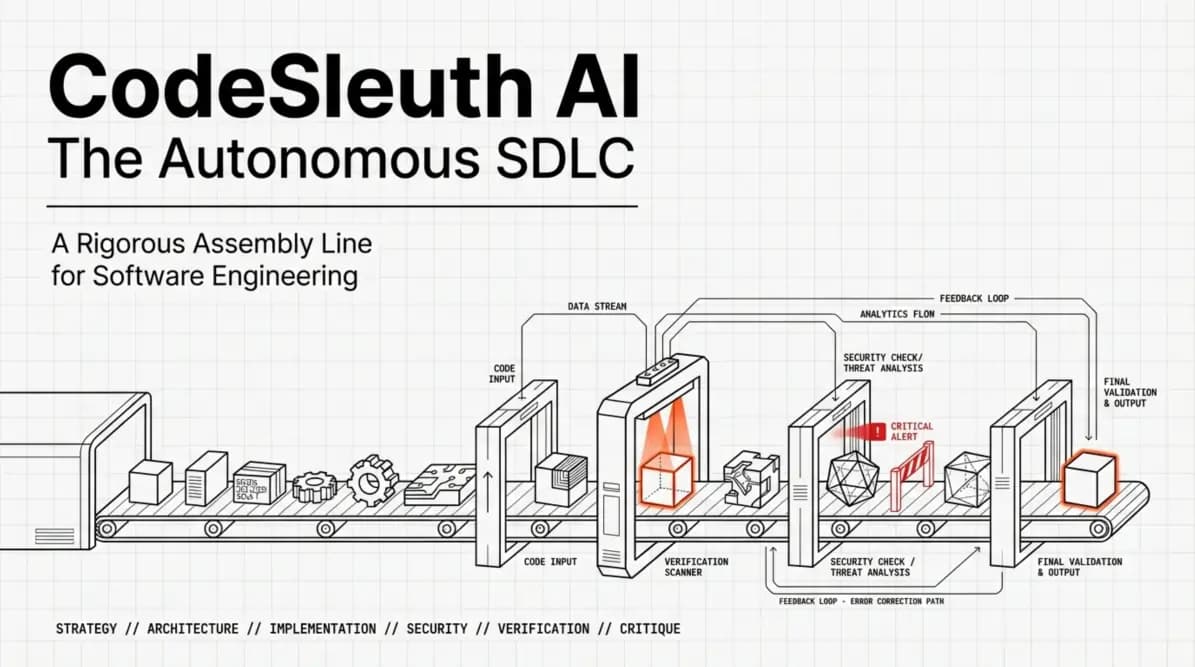
A 12-phase comprehensive roadmap from Product Discovery to Continuous Monitoring. Each phase builds upon the previous with strict handoff protocols and quality gates.
Product Discovery
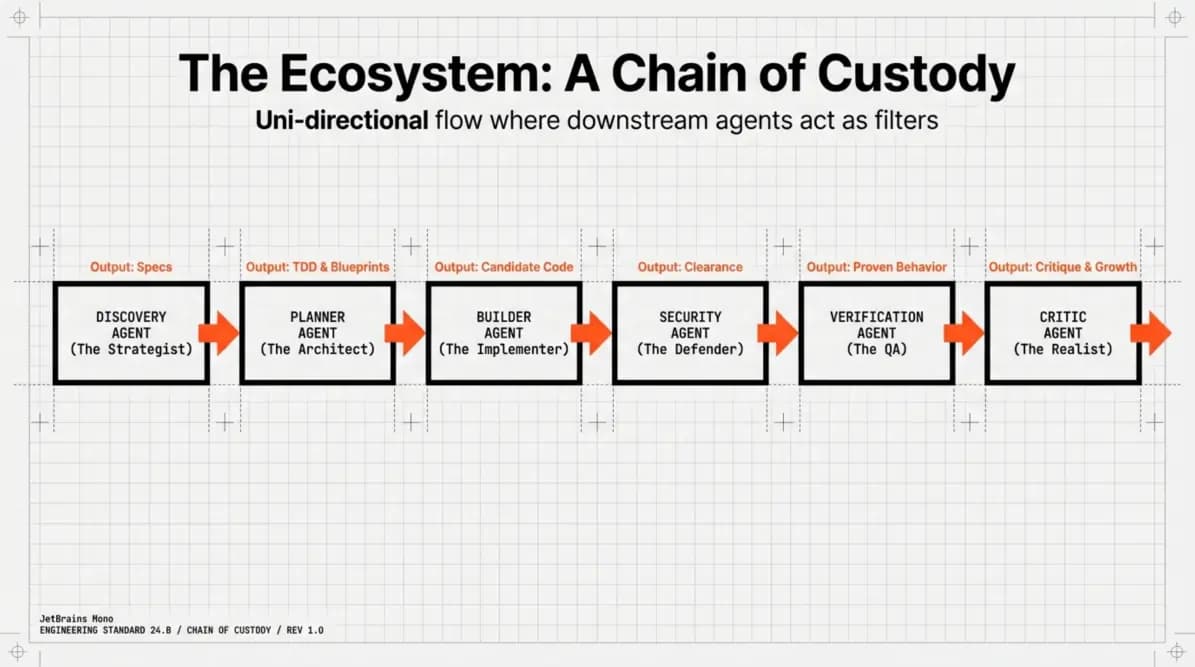
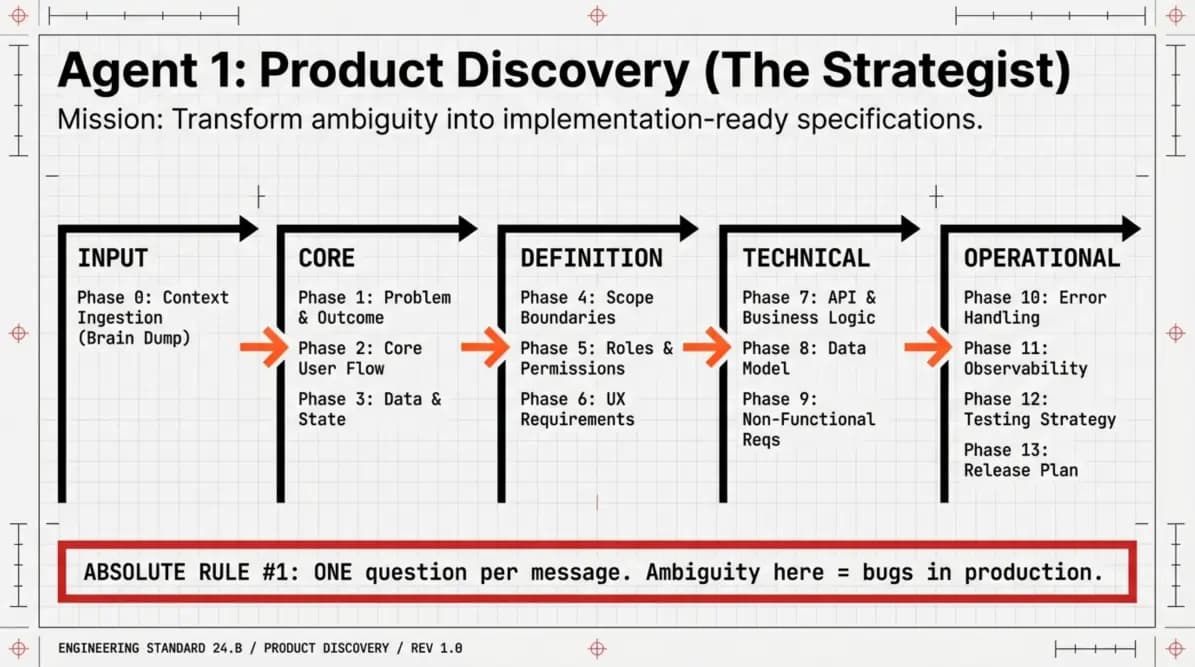
Every enterprise feature begins with exhaustive discovery. The Product Discovery Agent conducts a 16-phase structured process (Phase 0–15) to eliminate ambiguity before a single line of code is written.
- 16-phase structured discovery (Phase 0–15)
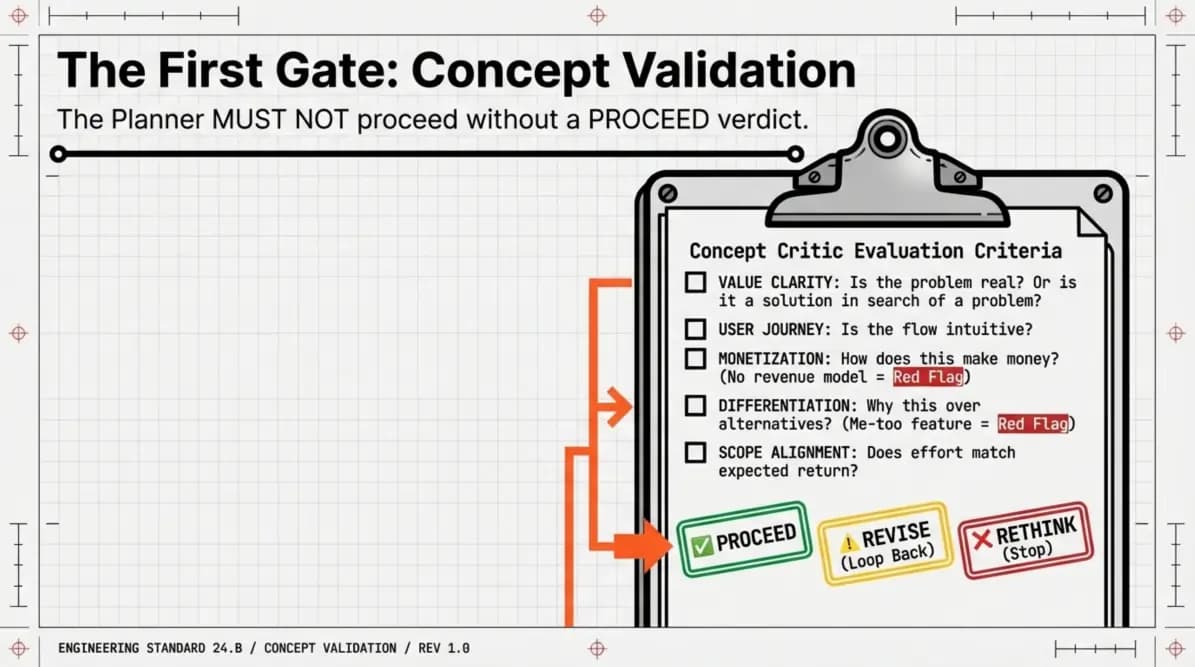
- Concept Validation Gate (KILL/PROCEED/PAUSE)
- Feature specification compilation
- Zero-ambiguity requirement enforcement
Technical Design
The Technical Designer Agent creates comprehensive blueprints for cross-platform development. Every architecture decision is documented across 7 TDD deliverables.
- Cross-platform scoping (6 platforms)
- Unified sync strategy
- API contract definitions
- Blast radius analysis
Application Building
The Application Builder Agent implements features with strict quality gate enforcement. Every change must pass lint, typecheck, test, and build verification.
- Quality gate enforcement (4 gates)
- 5-stage repair system with failure-mode classification
- Progress tracking via phases.md
- Smallest possible diff philosophy
Security Assessment
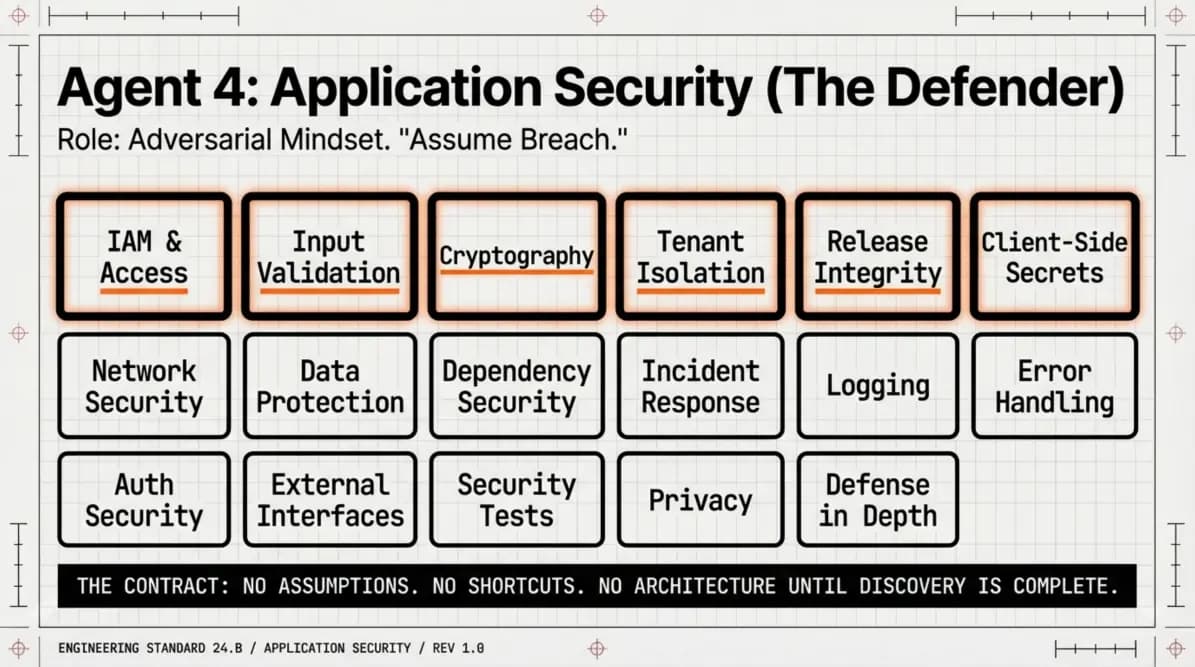
The Security Agent operates with an 'Assume Breach' mindset, evaluating code against 17 distinct security domains. No shortcuts, no suggestions—only BLOCK or APPROVE.
- 20 domain security assessment
- OWASP Top 10 compliance
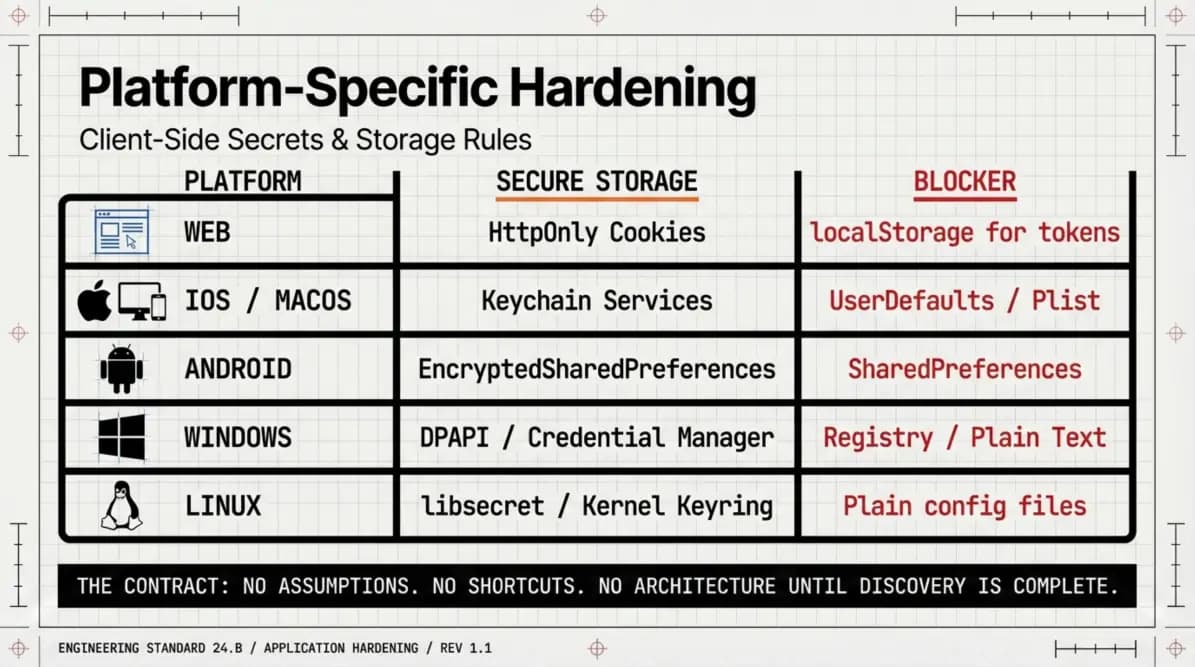
- Platform-specific security annexes
- Mandatory security test coverage
Product Critique
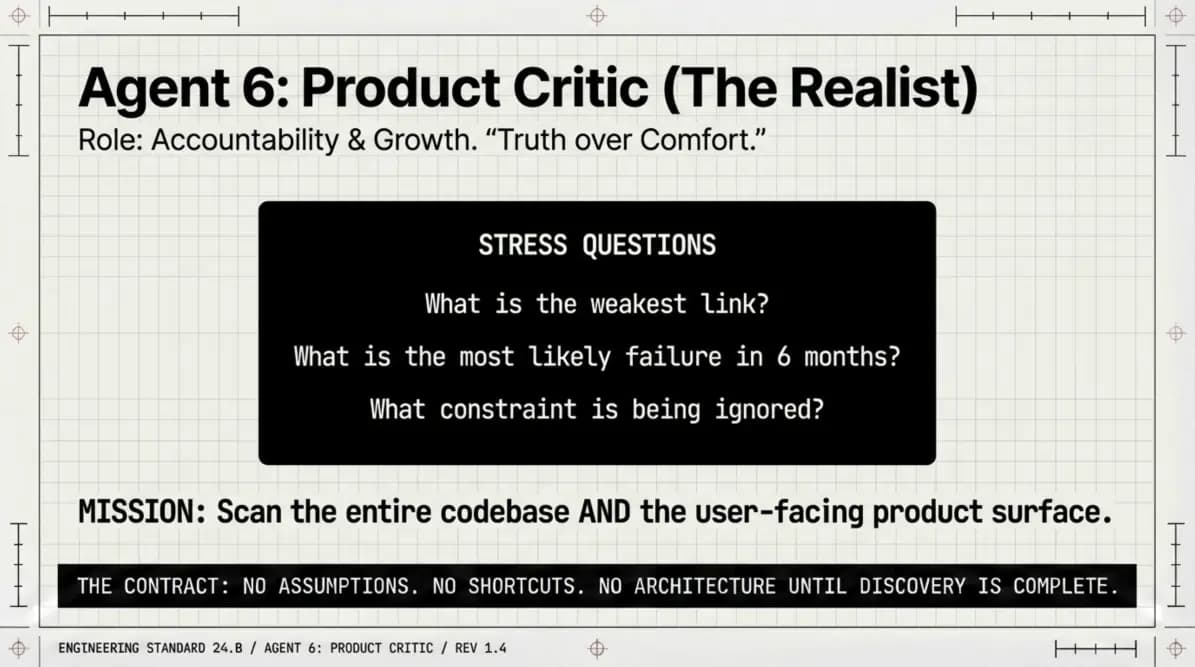
The Product Critic Agent provides 'truth-over-comfort' analysis. It has the power to halt projects that fail monetization or market differentiation criteria.
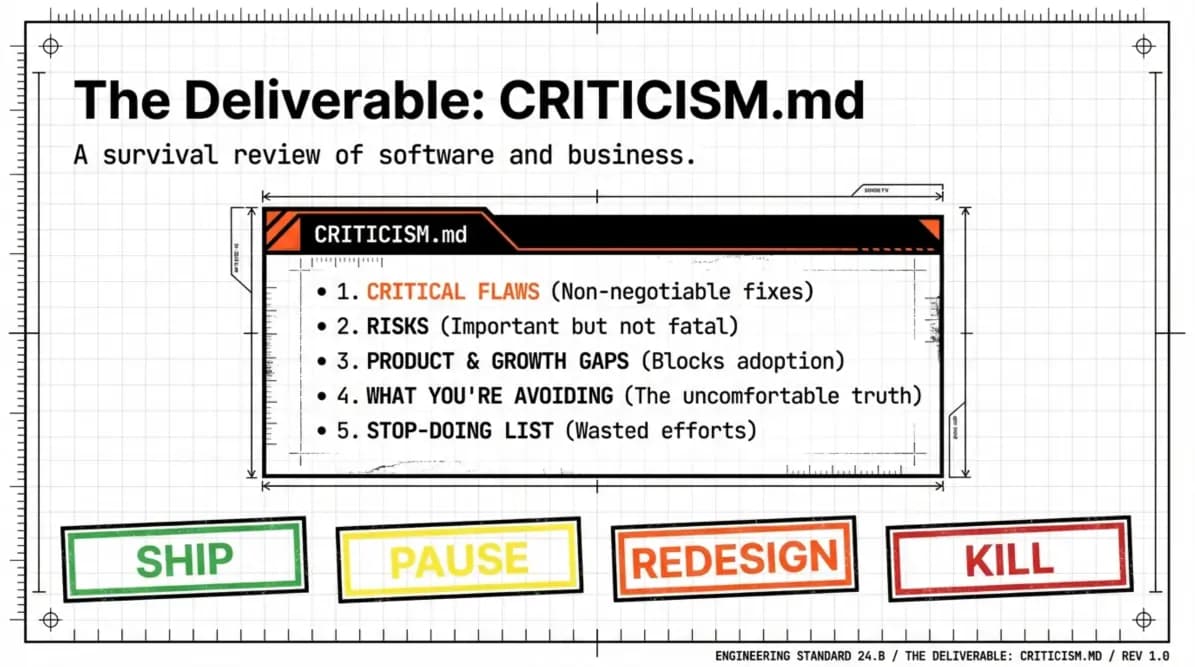
- CRITICISM.md generation
- Top 10 Fix-First list
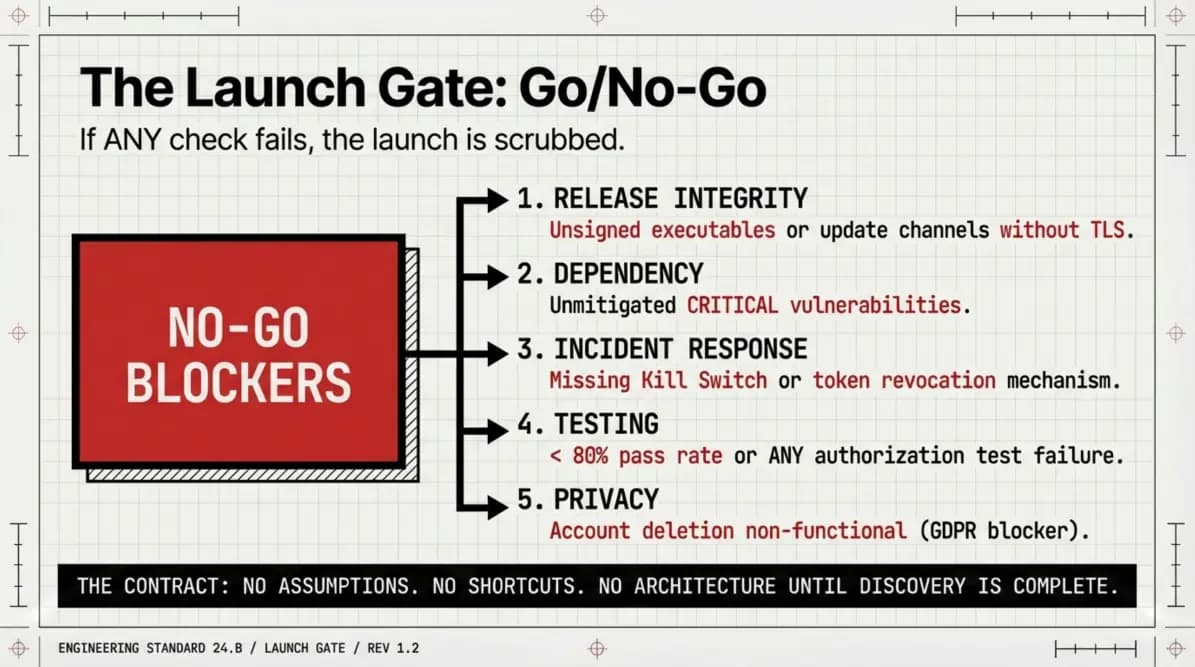
- Go/No-Go launch gate
- Red Team Mode analysis
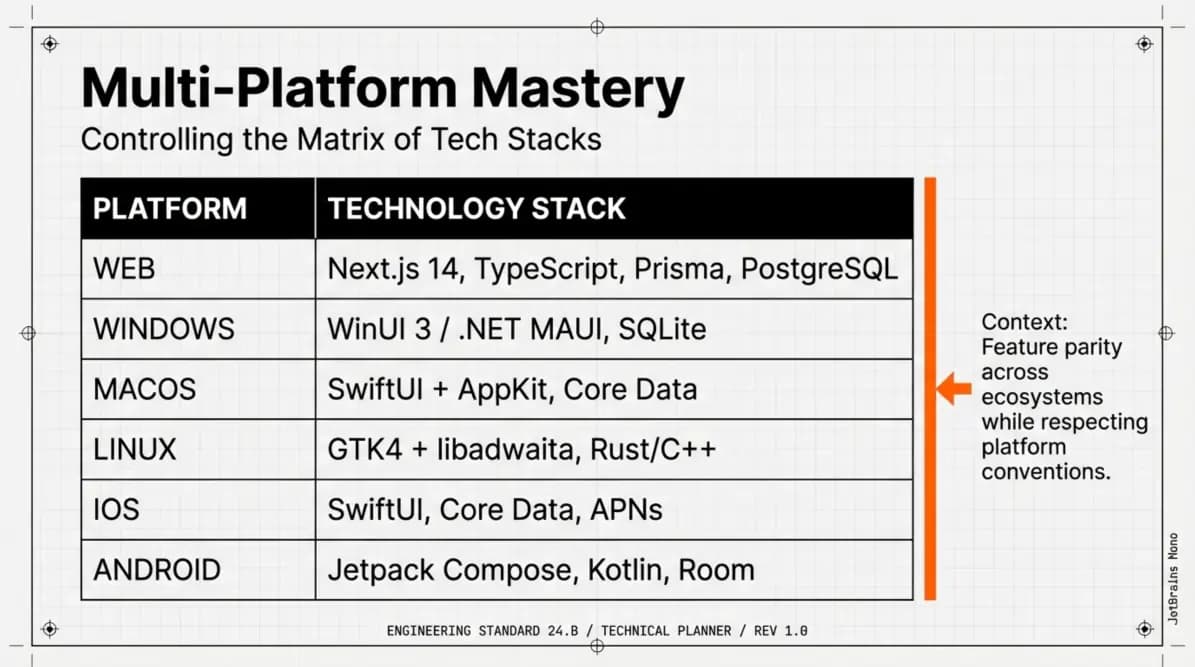
Platform Parity
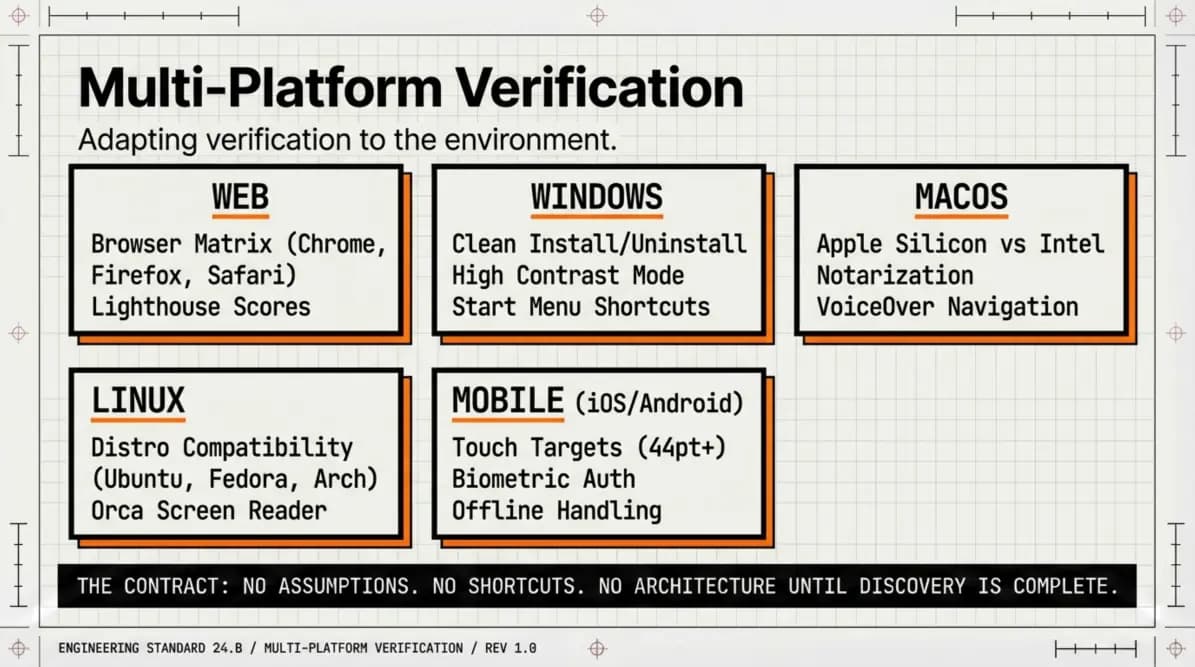
Absolute platform parity is non-negotiable. Features must work identically across Web, Windows, macOS, Linux, iOS, and Android with unified architecture.
- 6-platform support matrix
- Unified API contracts
- Platform-specific implementations
- Cross-platform testing suite
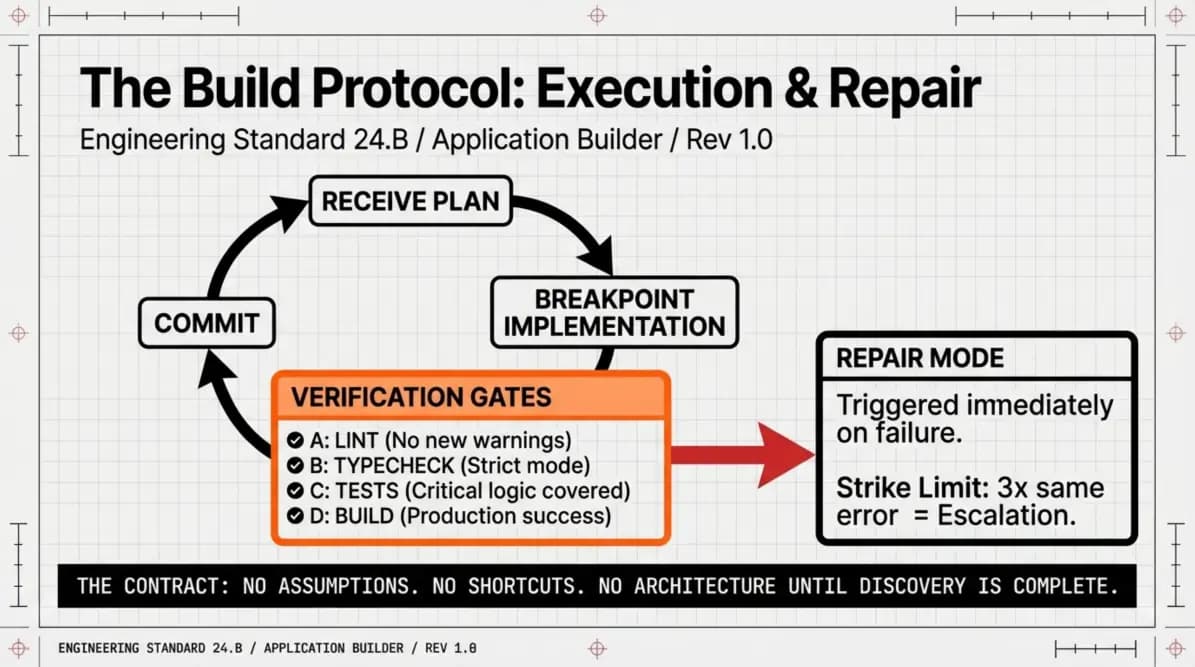
Quality Gates
Four mandatory quality gates must pass before any code ships. Red means stop. Green means ship. There is no middle ground in enterprise development.
- Lint: Zero warnings policy
- Typecheck: Strict mode enforced
- Tests: Critical logic coverage
- Build: Production verification
Documentation
Every project maintains comprehensive documentation through phases.md tracking. This enables context continuity across sessions and team members.
- phases.md progress tracking
- Context window management
- Change log maintenance
- Implementation runbooks
Repair Mode
When gates fail, Repair Mode activates. The smallest possible surface area is fixed first. No refactors, no 'while I'm here' changes—only targeted repairs.
- Minimal surface area fixes
- Re-run failing gate first
- Then verify all gates
- Exit only when all green
Security Non-Negotiables
Some security rules cannot be overridden. Never hardcode secrets. Never log secrets. Validate all inputs. Fail closed on auth. No exceptions.
- No hardcoded secrets
- No secret logging
- Input validation at boundary
- Fail closed on auth
Ship Declaration
Only after all gates pass can a Ship Declaration be made. This includes summary, gate status, PR notes, test instructions, and rollback procedures.
- All gates verified green
- Complete change summary
- Manual test instructions
- Rollback documentation
Continuous Monitoring
Post-deployment monitoring ensures production stability. Error rates, performance metrics, and user feedback create a continuous improvement loop.
- Error rate monitoring
- Performance metrics
- User feedback integration
- Incident response protocols
Ready to Transform Your Development?
Join the multi-agent revolution and experience enterprise-grade development with rigorous quality gates.