Education
Education Software Platform Challenges: Why Learning Stops When Systems Fail
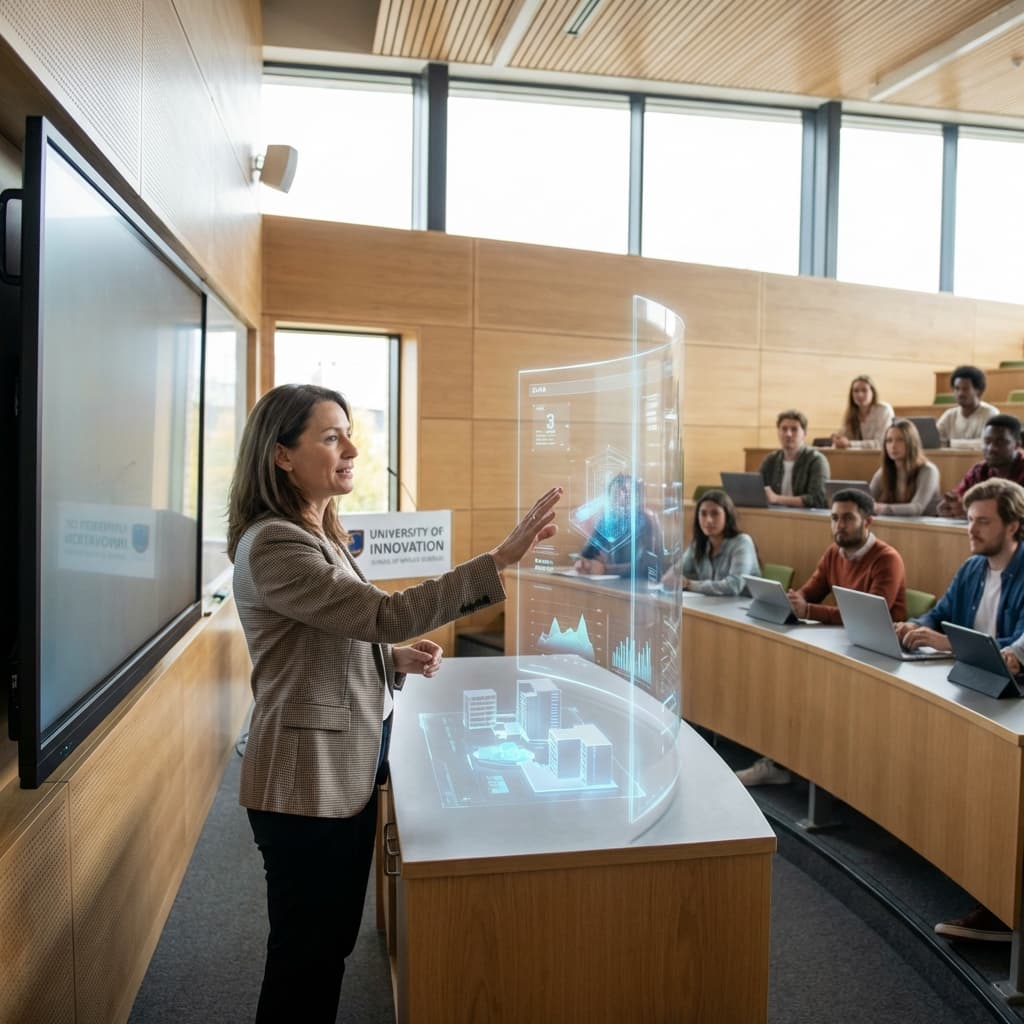
Education technology promises to transform how students learn, teachers teach, and institutions operate. Learning management systems deliver courses to millions. Student information systems track academic records that determine futures. Assessment platforms evaluate mastery in high-stakes examinations. Accessibility tools ensure that learning reaches every student regardless of ability.
When education software fails, learning stops. Students cannot access coursework during critical study periods. Grades are calculated incorrectly or lost entirely. Assessment systems crash during examinations, invalidating results and requiring retakes. The consequences fall heaviest on the students who can least afford disruption—those for whom this examination or this semester represents an irreplaceable opportunity.
Yet education software is often developed with budget constraints that preclude rigorous verification, timeline pressures driven by academic calendars that cannot slip, and requirements gathered from educators who understand pedagogy but not software engineering.
The Hidden Failure Mode: Pedagogical Intent vs. Technical Implementation
Education software fails because educational requirements are expressed in pedagogical language that does not translate directly to technical specifications. A curriculum designer specifies that "the system shall provide formative assessment aligned with learning objectives." A developer implements a quiz module that presents questions and records answers. Both believe the requirement has been satisfied.
Then classroom reality reveals the gaps. The quiz module presents questions in fixed order rather than adapting to demonstrated mastery. It records only right/wrong without capturing student reasoning. It provides scores without diagnosing specific misconceptions. It does not distinguish between a student who guessed correctly and one who applied correct reasoning. The assessment is "formative" in name only—it lacks the pedagogical depth that formative assessment requires.
This pattern pervades education software. Gradebooks calculate averages without implementing standards-based grading. Accessibility features provide text-to-speech without ensuring that mathematical notation, scientific diagrams, and multimedia content are accessible. Collaboration tools enable group work without preventing free-riding or ensuring equitable participation.
The hidden failure mode is not software bugs. The code executes exactly as designed. The failure is that the design was based on feature descriptions rather than pedagogical requirements—requirements that are obvious to educators but invisible to developers reading user stories.
Why Traditional Tools Do Not Solve This
Educational institutions have invested in learning management systems, student information systems, and educational technology platforms. These investments create capability without solving the pedagogical gap.
**Learning management systems** organize courses and deliver content, but content delivery does not ensure learning. An LMS can perfectly deliver materials while the learning experience those materials provide is pedagogically ineffective.
**Student information systems** track enrollment and academic records, but record-keeping does not ensure data accuracy. An SIS can reliably store grades while the calculation and transmission of those grades contains errors that affect student transcripts.
**Assessment platforms** administer tests and record responses, but administration does not ensure validity. A platform can reliably deliver an examination while the examination itself fails to measure what it claims to measure.
**Accessibility tools** provide accommodations, but accommodation availability does not ensure accessibility. A tool can provide closed captions while those captions are auto-generated, inaccurate, and fail to convey the educational content.
These tools optimize educational administration. They do not verify that the educational experience they enable achieves educational objectives.
CodeSleuth: A System, Not a Tool
CodeSleuth enforces the discipline that education software requires: every pedagogical requirement translated precisely, every assessment validated for accuracy, every accessibility feature tested for effectiveness.
**Discovery** bridges the gap between pedagogical intent and technical requirements. The Product Discovery Agent works through educational requirements one element at a time. For formative assessment, discovery does not stop at "provide formative assessment." It continues: What learning objectives does the assessment measure? How should questions adapt based on student responses? What feedback should students receive, and when? How should the system distinguish between different error patterns? What data should be captured for teacher analysis? How should the system support students with different accessibility needs? Every answer produces a specification that accounts for pedagogical reality.
**Planning** translates educational requirements into verifiable technical designs. The Technical Planning Agent produces artifacts that map each pedagogical requirement to specific assessment logic, specific feedback mechanisms, and specific test scenarios. When a curriculum designer asks "how does the system identify student misconceptions," the answer is a traceable reference to specific diagnostic algorithms and specific validation tests.
**Building** enforces education-specific quality gates. The Builder Agent is configured with domain-specific validators: all grade calculations must be verified for mathematical correctness across grading scales, all accessibility features must be tested against WCAG standards, all student data handling must comply with FERPA requirements. Every code change passes through gates that verify educational and compliance correctness.
**Verification** validates system behavior against realistic educational scenarios. The Verifier Agent generates test artifacts that demonstrate system performance across student populations. For assessment, evidence includes: typical student performance distribution tests, edge case scoring scenarios, accessibility validation across assistive technologies, grade calculation verification. This evidence supports both educational confidence and compliance documentation.
**Security** addresses student data protection. The Security Agent evaluates code against FERPA and student privacy requirements: student records must be protected from unauthorized access, directory information must be segregated from protected data, audit trails must document all access to student records. Deployment is blocked if privacy requirements are not verified.
**Criticism** surfaces the educational risks that deployment deadlines typically defer. The Product Critic Agent identifies gaps between pedagogical expectations and implemented capabilities, producing a mandatory record of educational effectiveness risks before semester deployment.
Industry-Specific Value: Education
For educational organizations, CodeSleuth addresses the specific risks that define the sector:
**FERPA compliance assurance**: Student privacy is legally protected. CodeSleuth's security review ensures that access controls, data handling, and audit logging meet FERPA requirements before student data is processed.
**Assessment validity verification**: High-stakes assessments must measure what they claim to measure. CodeSleuth's discovery process ensures that assessment specifications capture validity requirements and that implementations are verified against those requirements.
**Accessibility compliance**: Educational technology must be accessible to all students. CodeSleuth's verification ensures that accessibility features are tested against actual assistive technology usage patterns, not just automated scanners.
**Grade integrity**: Academic records affect student futures. CodeSleuth's verification ensures that grade calculations, transcript generation, and academic standing determinations are mathematically correct and consistently applied.
**Academic calendar alignment**: Education software must work when students need it—during registration, mid-terms, finals. CodeSleuth's load verification ensures that systems perform correctly during peak academic calendar periods.
The Consequences of Inaction
The consequences of education software failures are measured in student harm, compliance violations, and institutional reputation.
**Student consequences** are direct and personal. When assessment software fails during an examination, students must retake the exam under different conditions. When grade calculation errors affect transcripts, students may lose scholarships, admission offers, or graduation eligibility. When accessibility features fail, students with disabilities are excluded from learning.
**Compliance consequences** are severe. FERPA violations can result in loss of federal funding. ADA and Section 508 violations create legal liability. State education regulations add additional compliance requirements that software must meet.
**Institutional consequences** persist. Educational institutions compete for students based on educational quality and operational competence. Software failures that affect student experience become reputation issues that affect enrollment and donor relationships.
**Educator consequences** compound. Teachers whose technology fails lose instructional time. Their professional effectiveness is judged in part on student outcomes that technology failures undermine.
**Equity consequences** are structural. Software failures affect all students, but the burden falls disproportionately on students with fewer resources to work around failures, students with accessibility needs that broken features fail to serve, and first-generation students who lack family support to navigate institutional dysfunction.
Organizations that deploy education software without systematic verification against pedagogical and compliance requirements are accepting risk that falls on students—students who trusted the institution to provide reliable support for their learning.
Who This Is For
CodeSleuth is designed for educational organizations that recognize the gap between their pedagogical mission and their software capabilities.
It is for:
- Universities and colleges deploying learning management, student information, and assessment systems
- K-12 districts implementing curriculum delivery, grading, and student management platforms
- Educational technology companies building platforms used by institutions and students
- Assessment organizations developing high-stakes testing platforms
- Educational institutions that have experienced system failures affecting students
It is not for organizations building informal learning content with no institutional integration. It is not for early-stage edtech startups where institutional deployment is not yet occurring. It is not for projects where educational domain expertise is not required.
CodeSleuth is the system that ensures education software supports learning as reliably as students deserve. For organizations ready to close the gap between pedagogical intent and technical implementation, it is the foundation for software that educators trust and students can rely upon.
Ready to Transform Education Software?
Discover how CodeSleuth's multi-agent architecture can enforce the discipline your education organization demands.
Explore Other Industries
See how CodeSleuth works across different sectors