Mining & Natural Resources
Mining Software System Reliability: Why Operations Stop When Systems Fail Underground
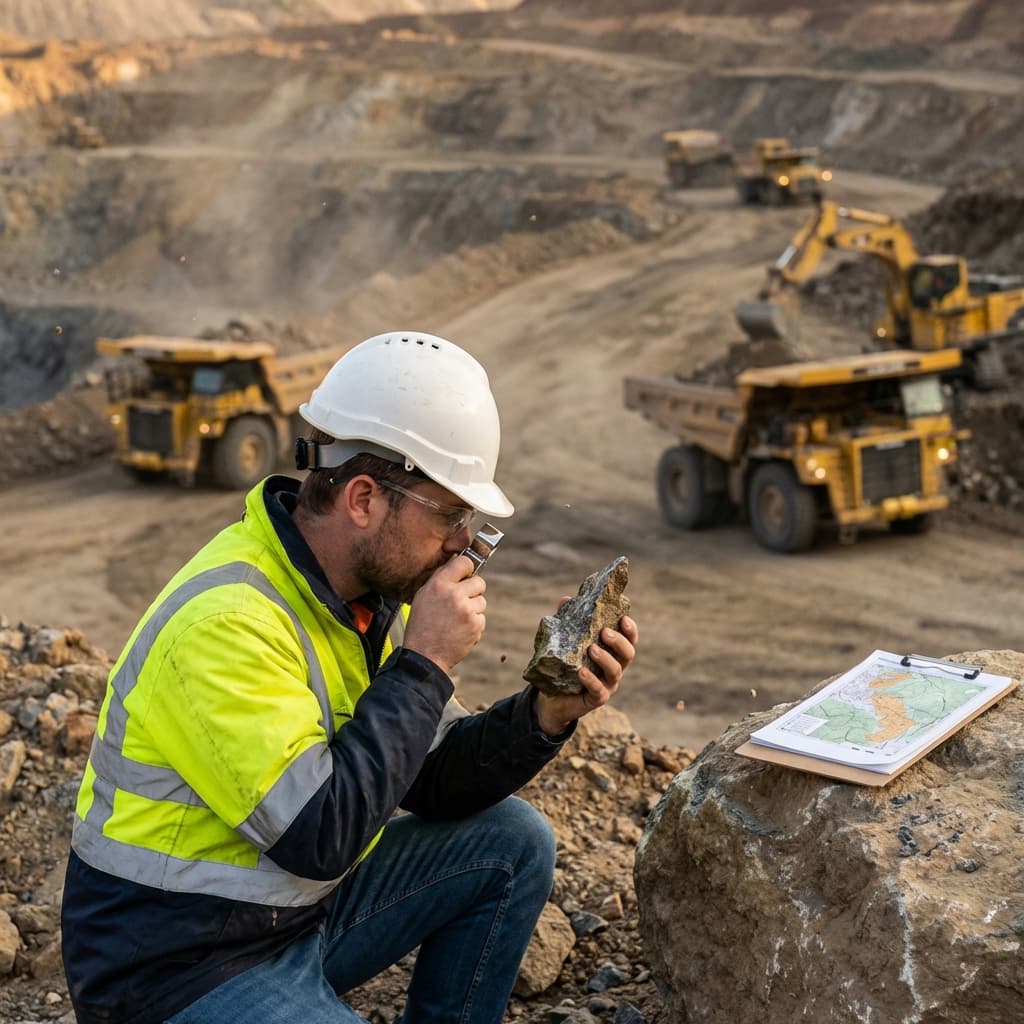
Mining extracts wealth from the earth under conditions that do not forgive software failures. Equipment operates in environments that destroy consumer electronics in hours. Communications traverse kilometers of rock that attenuate signals. Operations run continuously because stopping and starting costs more than continuing. Safety systems must work when the environment they protect against is actively trying to destroy them.
When mining software fails, operations stop. Production planning systems that miscalculate ore grades waste processing capacity on waste rock. Dispatch systems that route equipment incorrectly create traffic conflicts in spaces where passing is impossible. Ventilation monitoring that fails to detect dangerous gas concentrations exposes workers to lethal atmospheres. The software that manages mining operations must be as reliable as the equipment it controls.
The Hidden Failure Mode: Underground Reality vs. Surface Assumptions
Mining software fails because it is often designed for surface conditions and deployed underground. An operations manager specifies that "the system shall track fleet location in real time." A developer implements a GPS-based tracking system with wireless data transmission. Both believe the requirement has been satisfied.
Then underground deployment reveals the gaps. GPS signals do not penetrate rock—underground positioning requires entirely different technology. Wireless transmission faces multipath interference, signal shadowing, and infrastructure that miners routinely damage with moving equipment. "Real time" becomes "when connectivity permits." The system that worked perfectly in the surface test environment fails entirely in the underground environment it was designed for because its design assumptions were invalid underground.
This pattern pervades mining software. Geological models assume data density that exploration budgets do not support—resulting in grade surprises that affect processing recovery. Maintenance systems assume equipment availability for scheduled maintenance—but equipment that is half a kilometer underground cannot be pulled to surface for a scheduled service. Environmental monitoring assumes continuous data transmission—but monitoring points in active mining areas face damage and communication interruption.
The hidden failure mode is not software bugs. The code executes exactly as designed for conditions that do not exist in mines.
Why Traditional Tools Do Not Solve This
Mining companies have invested in fleet management, geological modeling, and operational planning systems. These investments create capability without solving the environment problem.
**Fleet management systems** track and dispatch mobile equipment, but surface-designed tracking technology does not work underground. A system proven in open-pit operations may be useless in underground development.
**Geological modeling** estimates resource distribution, but model confidence depends on data that is expensive to collect and difficult to verify until mining exposes the rock. A model can be geometrically accurate while grade estimates are wrong enough to affect mine planning.
**Mine planning systems** schedule extraction sequences, but planning assumes equipment performance that underground conditions degrade. A plan optimized for theoretical productivity fails when actual productivity differs.
**Safety systems** monitor hazards, but monitoring assumes infrastructure integrity that operating mines do not guarantee. A perfectly designed monitoring system becomes ineffective when its sensors are damaged, its communications are interrupted, or its operators are underground where they cannot receive alerts.
These tools optimize mining operations under assumed conditions. They do not verify that those conditions actually exist in the operating environment.
CodeSleuth: A System, Not a Tool
CodeSleuth enforces the discipline that mining software requires: every deployment assumption verified against underground conditions, every backup mode validated against communication failures, every safety system tested against the hazards it must detect.
**Discovery** is environment-aware and failure-conscious. The Product Discovery Agent treats operating environment as a first-class constraint. For fleet tracking, discovery does not stop at "track fleet location in real time." It continues: What positioning technology is available in this specific mine's conditions? What communication infrastructure exists, and what are its failure modes? How frequently must position be updated, and what is acceptable latency? What should the system do when communication is unavailable? How should the system behave when vehicles enter areas without coverage? What backup mechanisms exist for safety-critical location information? Every answer produces a specification that accounts for underground reality.
**Planning** translates mining requirements into verifiable technical designs. The Technical Planning Agent produces artifacts that map each operational requirement to specific technology selections, specific degradation modes, and specific test scenarios. When a mine manager asks "how does the system track vehicles when Wi-Fi infrastructure fails," the answer is a traceable reference to specific backup positioning mechanisms and specific validation tests.
**Building** enforces mining-specific quality gates. The Builder Agent is configured with domain-specific validators: all time-critical systems must define behavior under communication loss, all sensor integrations must handle calibration drift and failure gracefully, all safety systems must provide positive indication of failure. Every code change passes through gates that verify operational robustness, not just functional correctness.
**Verification** validates system behavior under realistic mining conditions. The Verifier Agent generates test artifacts that demonstrate system performance across operational scenarios. For fleet tracking, evidence includes: normal coverage tests, coverage gap tests, infrastructure damage scenarios, multi-system integration tests. This evidence supports both deployment confidence and safety case documentation.
**Security** addresses industrial control system protection. The Security Agent evaluates code against mining-specific OT security requirements: dispatch systems must be protected from unauthorized commands, safety systems must be protected from manipulation, production data must maintain integrity for resource accounting.
**Criticism** surfaces the operational risks that production pressures typically defer. The Product Critic Agent identifies gaps between operational expectations and verified capabilities, producing a mandatory record of deployment risks before systems control underground operations.
Industry-Specific Value: Mining & Natural Resources
For mining organizations, CodeSleuth addresses the specific risks that define the sector:
**Underground operability**: Software that works on the surface may fail underground. CodeSleuth's discovery process ensures that technology selections and system designs account for the specific conditions of each mine.
**Safety system reliability**: Mining safety systems must work when hazards are present. CodeSleuth's verification ensures that monitoring, alarming, and response systems function correctly under realistic failure scenarios.
**Grade control accuracy**: Processing efficiency depends on ore grade prediction. CodeSleuth's verification ensures that geological modeling, reconciliation, and grade control workflows produce accurate and consistent results.
**Mobile equipment optimization**: Fleet efficiency affects mining costs. CodeSleuth's verification ensures that dispatch, tracking, and productivity systems handle the communication and positioning challenges of mining environments.
**Environmental compliance**: Mining operates under environmental permits. CodeSleuth's artifacts document how monitoring and reporting systems meet permit requirements.
The Consequences of Inaction
The consequences of mining software failures are measured in production loss, safety incidents, and compliance violations.
**Production consequences** are immediate. When dispatch systems fail, equipment waits. When grade control fails, processing capacity is wasted on low-grade material. When planning systems fail, mining sequences produce ore when processing cannot take it, or processing starves while ore sits in stockpiles.
**Safety consequences** are severe. Mining is one of the most hazardous industries. Software failures in ventilation monitoring can expose workers to toxic or oxygen-depleted atmospheres. Failures in ground monitoring can fail to warn of imminent collapse. Failures in vehicle tracking can allow collisions in confined spaces.
**Compliance consequences** compound. Mining permits carry environmental monitoring and reporting requirements. When monitoring systems fail to collect required data, permit compliance is jeopardized. Resource reporting to investors and regulators requires verified data—software failures that affect data integrity create disclosure risk.
**Capital efficiency consequences** persist. Mining requires massive capital investment. Software failures that reduce equipment utilization, extend development schedules, or delay production directly affect return on that capital.
**Environmental consequences** extend beyond the mine. When environmental monitoring fails—water quality, tailings dam sensors, dust monitoring—environmental damage can occur without detection until it becomes visible to regulators or communities.
Organizations that deploy mining software without systematic verification against operating environment conditions are accepting operational and safety risk in conditions where failure consequences are severe.
Who This Is For
CodeSleuth is designed for mining organizations that recognize the gap between their operating environment and their software capabilities.
It is for:
- Mining companies deploying fleet management, geological modeling, and operational planning systems
- Mining technology companies building platforms for harsh environment deployment
- Mining contractors providing equipment and operations services
- Mining organizations that have experienced software failures in operational environments
- Operations implementing safety and environmental monitoring systems
It is not for organizations building exploration data management with no operational deployment. It is not for surface operations where consumer technology is adequate. It is not for projects where mining domain expertise is not required.
CodeSleuth is the system that ensures mining software survives the operating environment. For organizations ready to close the gap between surface design and underground reality, it is the foundation for software that operations trust and workers can depend upon.
Ready to Transform Mining & Natural Resources Software?
Discover how CodeSleuth's multi-agent architecture can enforce the discipline your mining & natural resources organization demands.
Explore Other Industries
See how CodeSleuth works across different sectors